

Why might a house wall start to pull away?
A wall pulling away from the main structure signals the need for urgent repairs, as the building’s structural integrity has been compromised. While signs of such serious damage may sometimes remain hidden for a considerable time, in most cases, the issue is preceded by a range of visible indicators: distortion of window and door openings, the appearance of cracks in the walls, and the tilting or cracking of floor slabs.
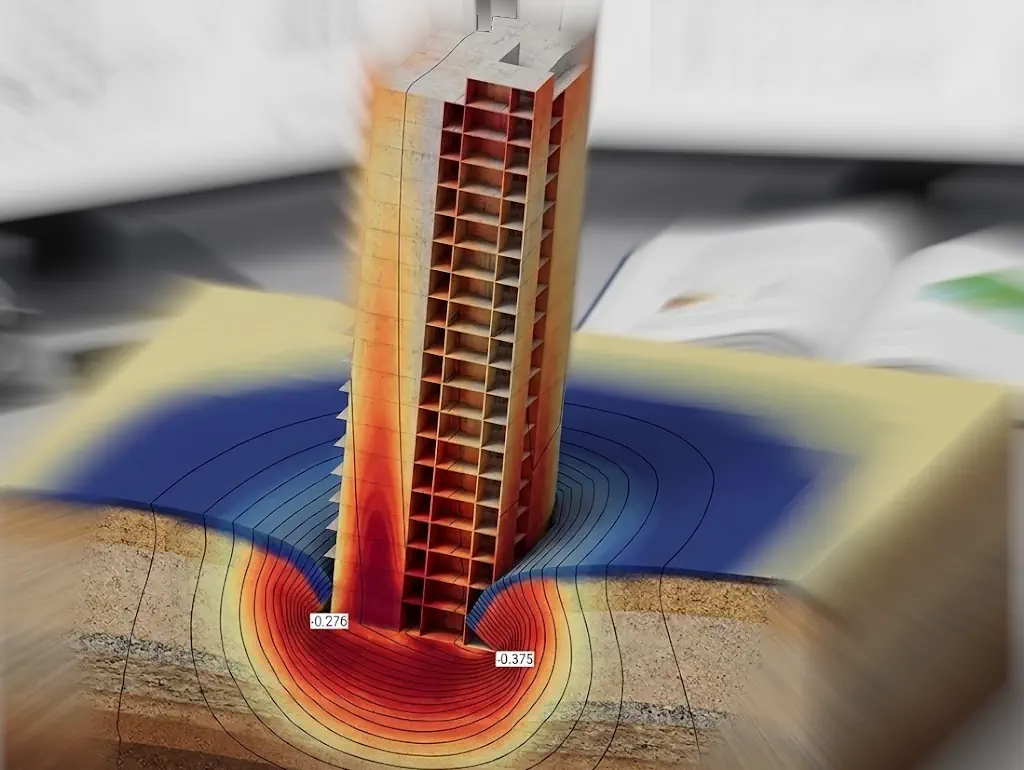
One of the most common causes is uneven settlement of the foundation and subsoil. If different sections of a building settle by varying amounts, tensile stresses develop in the walls—forces that masonry withstands far less effectively than compressive loads. Consequently, uneven settlement is frequently accompanied by vertical and diagonal cracks. Weak, heterogeneous, or water-saturated soils pose a particularly high risk.
Undermining or excessive saturation of the base can also be the cause. Damage to water supply or sewage networks, inadequate surface water drainage, errors in the construction of the perimeter apron, or changes in hydrogeological conditions can alter the soil characteristics beneath a specific section of the foundation.
These processes are also exacerbated by prolonged, man-made vibrational loads—stemming from both industrial equipment and transport infrastructure. Such vibrations cause the compaction of heterogeneous soil layers in the foundation.
Nearby construction activities also have a detrimental effect. Excavation work, new soil loads from adjacent massive structures, and the driving of heavy concrete piles can all trigger soil displacement. Unlike the examples mentioned earlier, such movements can occur quite rapidly and unexpectedly.
Another category of causes involves the redistribution of loads. Adding a story, installing heavy floor structures or extensions, and carrying out renovations or installing equipment not included in the original design alter the building’s structural behavior. Increased loading on a specific section of the foundation can lead to additional settlement in that area.
Older buildings are also characterized by structural and construction defects, such as insufficient mortar strength, improper brick bonding, uneven joints, and a lack of—or inadequate—reinforcement. Such flaws may remain latent for decades but become critical following changes in loading or deformation of the foundation.
A wall may also pull away or bulge due to a loss of connection with floor structures and other structural elements. For instance, if the mechanical connection between the wall and the floor beams weakens, the load is no longer properly transferred to the masonry. Effectively, the wall loses some of its structural rigidity and becomes more susceptible to buckling.
External factors must also be considered separately, such as vibrations caused by heavy traffic, railways, the metro, or large-scale construction work near the building. For structures with an already compromised foundation, such dynamic impacts can accelerate the development of deformations.
What hidden danger lies behind the visible damage to the building?
The main issue is that a visible gap or crack may represent only the surface manifestation of a process occurring within the structure and the underlying soil.
If the cause is foundation settlement, repairing the wall alone—without stabilizing the base—fails to resolve the underlying problem. Settlement continues, and new stresses accumulate within the masonry. Over time, cracks may widen, branch out, and spread to adjacent structural elements.
Particular attention must be paid to cracks located at corners. Corner zones provide the building’s spatial rigidity; therefore, damage in these areas may indicate significant deformation of the structural system.
For commercial, industrial, and administrative buildings, the consequences can be more unpredictable. The more complex and massive the building, the greater the level of detailed attention required. Wall deformation can affect floor slabs, facade systems, utility networks, interior partitions, and door and window assemblies. Structural misalignment can lead to additional costs due to hidden damage developing concurrently.
Faq
What should be checked first?
The foundation, the soil base, the connections between walls and floor structures, and other structural elements, as well as potential sources of dampness or undermining.
Can the crack simply be filled in?
No, absolutely not. This level of damage is a serious problem that could lead to the collapse of the building.
A comprehensive solution from GIS
It is rarely possible to effectively remedy wall displacement using a single, universal method. If the deformation involves both geotechnical and structural components, it is necessary to address both the cause and the consequences simultaneously.
In such cases, the company’s specialists employ a combination of Georesin, Stati-CAL, and Inject technologies—selecting the appropriate ones based on assessment findings—to rectify the full spectrum of damage.
1. Georesin — stabilization of the soil base
If uneven settlement is the primary cause of a wall shifting, the priority is to restore the load-bearing capacity of the soil beneath the foundation.
The Georesin Deep Lifting technology involves injecting a geopolymer material into the soil base. The material fills voids and loose zones, compacts the soil, and increases its load-bearing capacity. Where technically feasible, the technology also allows for the controlled lifting of the subsided section of the foundation and the correction of its position. Georesin Floor Lifting technology is used when the geometry of floor slabs has been compromised and the slabs need to be returned to their design position.
If there is no technical need to lift the structures, or if conditions favor the use of gel-composite grouts, stabilization can be carried out using the Inject technology.
This is fundamentally important: instead of just restraining the wall, the load transfer system itself “building – foundation – soil” is restored.
2. Stati-CAL — wall restoration and tying
Once the cause of the deformation has been stabilized, the structural integrity of the damaged masonry must be restored.
Stati-BAR and Stati-TIE systems are used for this purpose. Stati-BAR helical bars are installed into prepared horizontal slots, bridging cracks and distributing tensile forces across a larger area of the wall. Stati-TIE is used to tie together separated (detached) structural elements; these long stainless-steel helical anchors connect the wall to other structural components and stabilize sections that are bulging or pulling away.
These bars and anchors bear the load, tying together and reinforcing damaged structures while ensuring the transfer of forces between different parts of the building.
For certain soil types, the effectiveness of injection technologies using geopolymers and gel composites may be limited. In such cases, Stati-Pile extendable piles offer a suitable solution.
3. Inject — filling of cracks and internal voids
If the uneven settlement of the foundation soil is caused by hydrological factors, future risks are mitigated by applying injection-based waterproofing to the foundation structures and creating an anti-seepage barrier around the foundation through the injection of composite grouts into the soil.
Once structural reinforcement is complete, cracks and internal voids can be filled via injection. Injection materials penetrate accessible cavities and capillaries, filling the defects deep within the structure. This is particularly important for masonry, where voids, localized areas of loose material, and capillary channels may exist between individual elements. Injection restores the integrity of the damaged area and prevents moisture ingress.
If soil analysis indicates that using gel-composite grouts is the optimal approach, the foundation base is stabilized through soil injection using the “Inject” method.
Thus, a comprehensive solution can operate at three levels:
Georesin → soil base stabilization.
Stati-CAL → restoration of the wall’s structural integrity.
Inject → filling of cracks and internal voids.
It is precisely the systematic elimination of causes and consequences that yields a result impossible to achieve through cosmetic repairs alone.
Why do traditional methods not yield the desired result?
Is it sufficient to install metal ties or channel beams?
A massive steel or reinforced concrete binding structure can restrain deformation but does not eliminate its cause. If the soil continues to lose its load-bearing capacity, the loads simply redistribute to other areas. Traditional structures can also be heavy, require significant intervention in the facade, and create new local stress concentrations.
Is it possible to limit the work to repairing the foundation?
If the wall has already sustained structural damage, reinforcing the foundation alone may not be sufficient. Even if the structure is returned to its design level through geopolymer injection, the damage itself remains. It is necessary to assess the condition of the masonry and restore its load-bearing capacity.
Areas of application
Comprehensive solutions from “Geotechnical Engineering Systems” are applied to the stabilization and repair of: manufacturing and industrial buildings; warehouse and logistics complexes; office and administrative buildings; retail and commercial facilities; multi-story and residential buildings; historical structures; infrastructure facilities; and buildings with brick, stone, and concrete structures.
Ideally suited for facilities where repairs must be carried out with minimal disruption to production processes.


Solving the problem instead of fighting the consequences
A wall pulling away from the structure is not merely a problem with the wall itself, but rather an issue involving the entire system of interaction between the soil, the foundation, and the superstructure. That is why effective repair begins with identifying the mechanism of deformation.
“Geotechnical Engineering Systems” employs a comprehensive engineering approach: inspecting the structures and the soil base, identifying the causes of deformation, stabilizing the foundation and soil, structurally reinforcing walls, and injecting cracks and voids using specialized technology.
This approach makes it possible to systematically eliminate the root causes of deformation and restore the structural integrity of the building’s components, rather than simply masking the symptoms. This is particularly important for B2B projects, where the solution must not only fix visible defects but also ensure predictable building performance and minimize the risk of future repairs.
A professional assessment at an early stage helps determine whether local wall reinforcement is sufficient or if stabilization of the foundation and soil base is required. The sooner the true cause of the wall displacement is identified, the smaller the scope of intervention—and the lower the restoration cost—will be.