


Solving problems
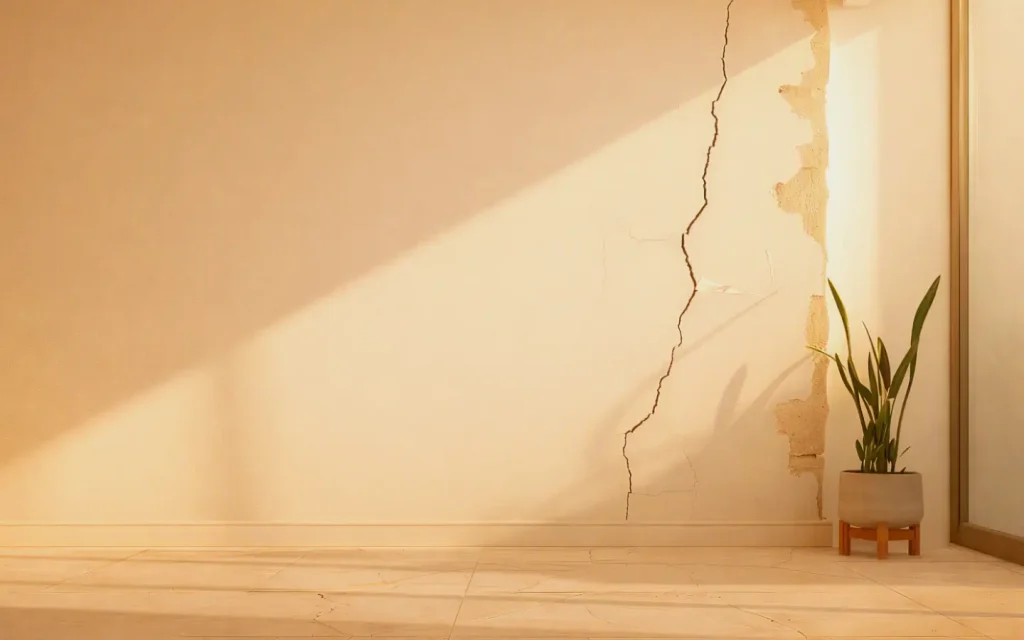
The nature of the damage is influenced by both the cause and the wall material. Brickwork, concrete panels, block structures, and aerated concrete differ in terms of stiffness, strength, and deformation capacity. Consequently, the same foundation deformation can manifest in different ways.
If soils of varying density lie beneath different sections of the foundation, they deform unevenly under load. One part of the foundation settles more than another. Brick and block masonry is particularly prone to cracking that follows the mortar joints and gradually spreads from corners or openings.
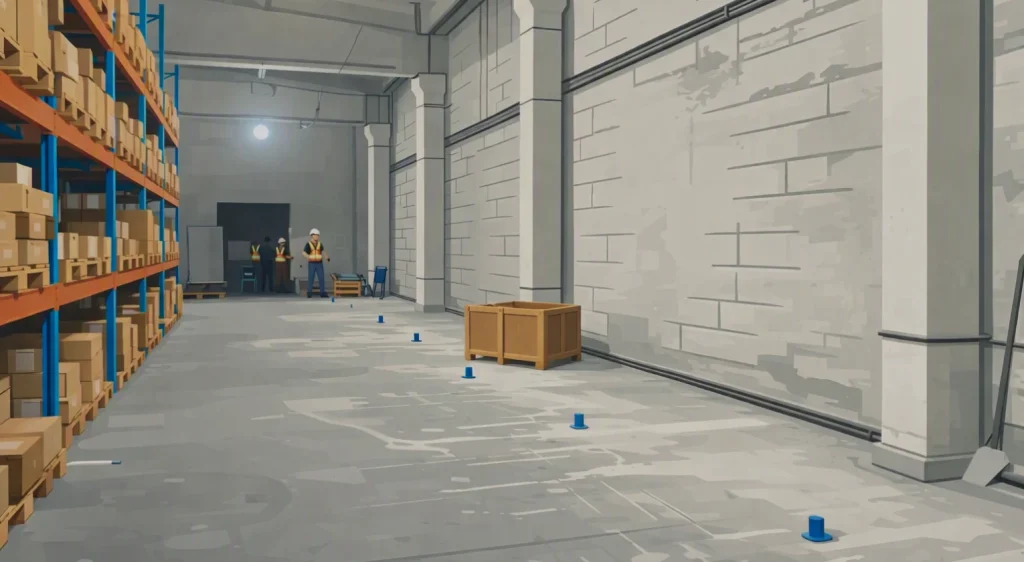
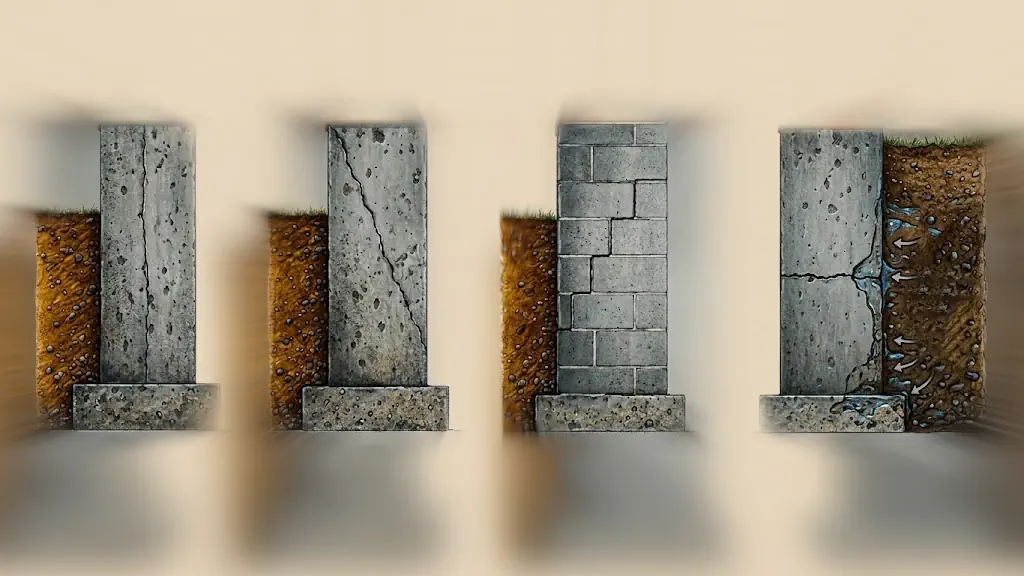
If different sections of the soil have varying densities or load-bearing capacities, the foundation settles unevenly. This generates additional stresses within the structure, which may manifest as vertical, horizontal, or diagonal cracks. Such processes are characteristic of all types of foundations.
Cracks can occur due to uneven foundation settlement, deformation of the supporting soil, inadequate subgrade preparation, excessive or uneven loads, reinforcement errors, thermal deformation, structural movement, and vibration effects.
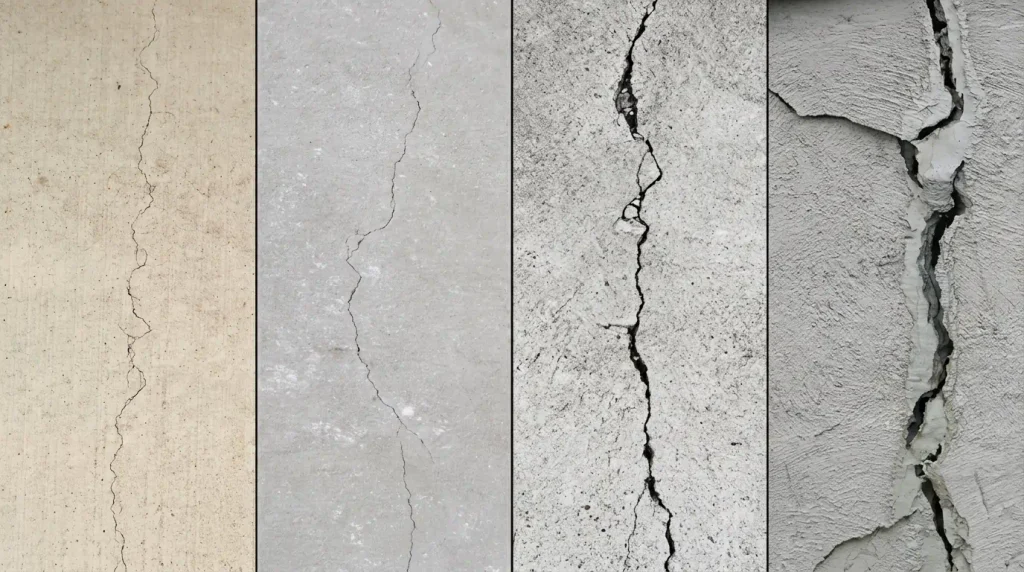
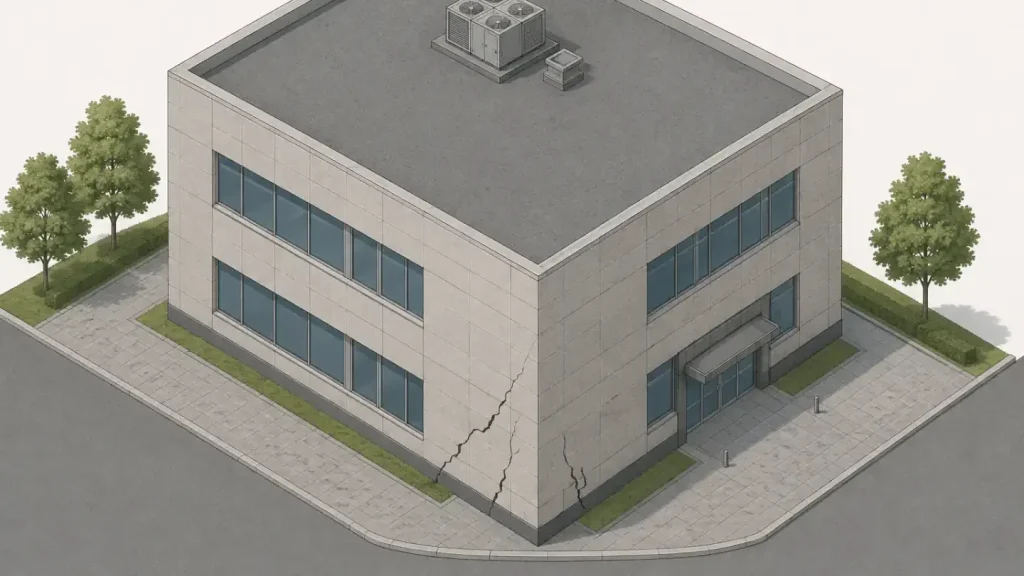
This is a clear indication that the “structure–foundation–soil” system behaves differently across various zones. Unlike uniform settlement, localized deformation causes the building to tilt, redistributes loads between walls and foundations, and can trigger a chain reaction of secondary damage.
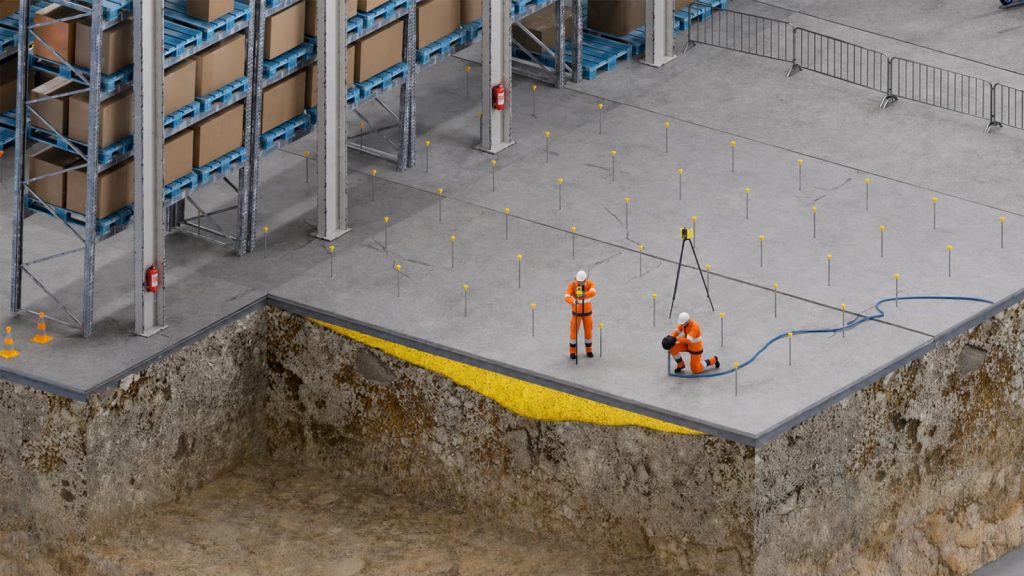
The gradual compaction of fill soils, the washing out of fine particles by water, fluctuations in the groundwater level, insufficient base compaction during construction, or the long-term impact of vibrations from equipment and traffic reduce the soil’s load-bearing capacity.
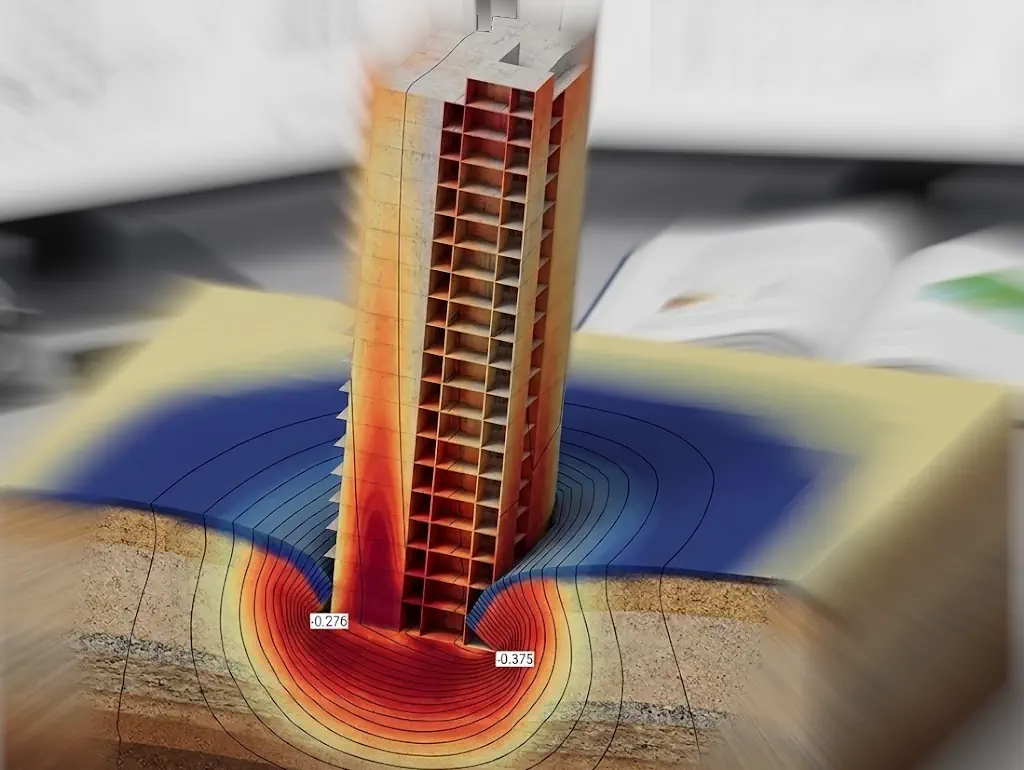
A wall may also pull away or buckle due to a loss of connection with floor slabs and other structural elements. Effectively, the wall loses some of its spatial rigidity and becomes more susceptible to buckling.